
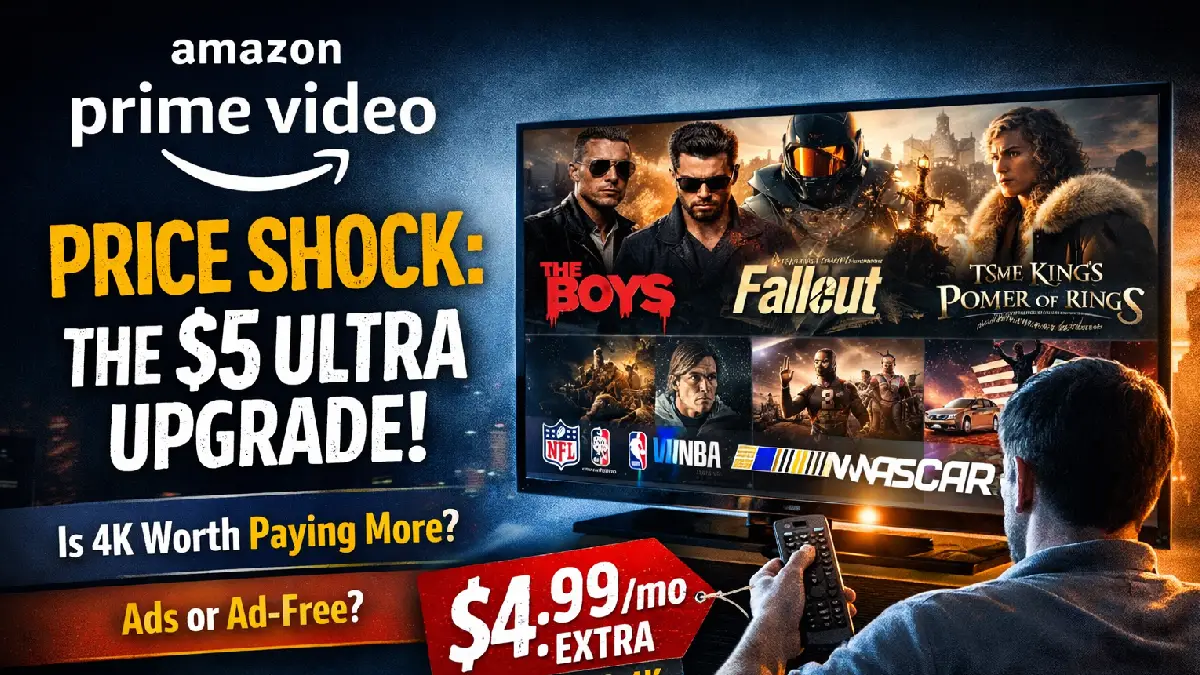
It starts with a simple question every streaming lover is now asking: “Why does watching my favorite show suddenly cost more?”
If you’re a loyal user of Amazon Prime Video, the answer may hit harder than expected. What once felt like a bundled bonus is now turning into a layered, premium experience—and yes, a more expensive one.
Amazon is officially reshaping how we watch content in the U.S., and this shift isn’t just about ads. It’s about redefining what “premium streaming” really means.
The Big Shift: Amazon Prime Video Cost Just Went Up
Starting April 10, 2026, Amazon is replacing its ad-free add-on with a new premium tier called Prime Video Ultra—priced at $4.99/month, nearly double the previous $2.99 fee.
But here’s the twist:
This cost is on top of your existing Prime membership, which already costs $14.99/month in the U.S.
What Changed?
- Old ad-free add-on: $2.99/month
- New Ultra tier: $4.99/month
- Total monthly cost (with Prime): ~$19.98
This move places Amazon right in line with competitors—but also raises serious questions about value.
Why Is Amazon Charging More Now?
Amazon isn’t just increasing prices randomly. The company claims this change reflects:
- Massive investment in original content
- Rising costs of live sports rights (NFL, NBA, etc.)
- Industry-wide shift toward tiered pricing
In fact, this mirrors a broader trend across streaming platforms—where even giants like Netflix and Disney+ are splitting features across pricing tiers.
The Real Reason (Between the Lines)
Let’s be honest:
Streaming platforms are no longer competing on price—they’re competing on experience.
And Amazon is betting that users will pay more for:
- Better video quality
- More flexibility
- Fewer interruptions
What Do You Actually Get With Prime Video Ultra?
At first glance, $4.99 may not sound like much. But what are you really paying for?
Key Features of Prime Video Ultra
- Ad-free streaming (except some live content)
- Up to 5 simultaneous streams (previously 3)
- Up to 100 downloads (previously 25)
- Exclusive 4K/UHD streaming access
- Dolby Vision + Dolby Atmos support
The Hidden Catch
Here’s what many users are missing:
If you don’t upgrade, you may lose access to 4K streaming entirely.
That’s not just an upgrade—it’s a forced downgrade for standard users.
Prime Video vs Netflix Movies: The Battle Just Got Real
This change puts Amazon directly against Netflix movies in a new way.
| Feature | Prime Video (Base) | Prime Video Ultra | Netflix Premium |
|---|---|---|---|
| Ads | Yes | No | No |
| 4K Streaming | No | Yes | Yes |
| Streams | 3–4 | 5 | 4 |
| Downloads | Limited | 100 | Varies |
What This Means
- Amazon is copying Netflix’s premium model
- But unlike Netflix, Prime already has a base cost
- So the perceived value is under pressure
Is This the End of “Cheap Streaming”?
Remember when amazon prime movies felt like a free bonus?
That era is fading fast.
Now, streaming looks like this:
- Base subscription (Prime)
- Add-on for no ads
- Add-on for quality (4K)
- Add-on for channels
It’s slowly turning into a cable TV 2.0 model.
What’s New on Amazon Prime Video Right Now?
Despite the pricing controversy, Amazon continues to push strong content.
Popular Titles Driving This Strategy
- Fallout
- Reacher
- The Boys
- The Rings of Power
- New blockbuster releases and sports
These amazon prime video movies and shows are the reason Amazon believes users will stay—even with higher costs.
The Psychology Behind the Price Hike
This isn’t just about money—it’s about behavior.
Amazon is using a strategy called:
“Feature Locking”
Instead of charging more for the same service, they:
- Move premium features into a higher tier
- Reduce value in the base plan
- Let users “choose” to upgrade
This makes the decision feel optional—but in reality, it’s often necessary.
How This Impacts Prime Amazon Users in the U.S.
For users in Amazon USA, the impact is immediate:
If You Stay on Basic Plan
- You’ll see ads
- You may lose 4K quality
- Limited downloads
If You Upgrade
- Better viewing experience
- Higher cost
- More flexibility
Amazon Prime Video History: How Did We Get Here?
To understand this shift, we need to look back.
Evolution of Prime Video
- Initially: Free perk with Prime
- Then: Added original content
- 2024: Introduced ads
- 2026: Introduced Ultra tier
This shows a clear pattern:
From value bundle → premium streaming platform
Should You Pay for Prime Video Ultra?
Let’s break it down honestly.
It’s Worth It If You:
- Watch a lot of amazon prime video movies
- Care about 4K quality
- Share accounts with family
- Hate ads
It’s NOT Worth It If You:
- Watch occasionally
- Don’t care about resolution
- Already pay for Netflix or others
Practical Tip: How to Save Money on Streaming
If your monthly streaming bill is rising, consider:
- Rotating subscriptions monthly
- Sharing plans legally
- Choosing ONE premium platform at a time
- Watching “new on amazon prime video” releases strategically
This simple approach can cut costs by 30–50%.
The Bigger Question: Where Is Streaming Headed?
Amazon’s move isn’t isolated—it’s a signal.
Streaming is entering a new phase:
- More tiers
- More fragmentation
- Higher costs
But also:
- Better content
- More control
- More personalization
Final Thoughts: Is This a Smart Move or a Risk?
Amazon is walking a fine line.
On one side:
- Premium experience
- Strong content
- Competitive positioning
On the other:
- Rising user frustration
- Subscription fatigue
- Growing competition
The real question isn’t just about price.
It’s this:
How much are we truly willing to pay for convenience and entertainment?
FAQs: Amazon Prime Video Cost & Ultra Tier
What is the new Amazon Prime Video cost in the U.S.?
The ad-free tier now costs $4.99/month, on top of the Prime membership.
Does Prime Video still include ads?
Yes, the base plan includes limited ads unless you upgrade.
Is 4K included in standard Prime Video?
No, 4K is now exclusive to the Ultra tier.
How does this compare to Netflix movies?
Netflix includes 4K in premium plans, while Amazon charges extra on top of Prime.
Is Prime Video Ultra available globally?
Currently, it’s focused on the U.S., with potential expansion later.